

Artificial Flowers vs. Real Flowers: The Complete Comparison for Businesses
Ordering fresh flowers every week for your office, hotel, or restaurant sounds romantic — but many entrepreneurs discover after a few years that the endless subscription has secretly become the largest item on the facilities budget. The question is not whether artificial flowers are now as beautiful as real ones (they are), but what the hidden costs, impact, and practical consequences of both choices are. In this guide, we'll lay out all the facts so you can make an informed decision for your business space.
Costs over 5 years: the real difference
An average office with a reception, meeting rooms, and a canteen needs about 6 to 10 bouquets for an appealing look. For fresh flowers via a weekly subscription in the Netherlands, you pay an average of €35 to €55 per bouquet per week. Do the math: 8 bouquets × €45 × 52 weeks = €18,720 per year. Over 5 years, that's almost €94,000 — without any issues, holidays, or price increases.
A comparable set of premium artificial flowers from the Botané collection costs between €3,000 and €5,000 one-time, depending on size and composition. With normal use, a premium bouquet lasts 5 to 8 years. This makes the annual cost approximately €600 to €1,000 — a saving of 92 to 97%. Use our price calculator to figure this out for your specific situation.
Quality: are artificial flowers still distinguishable from real ones?
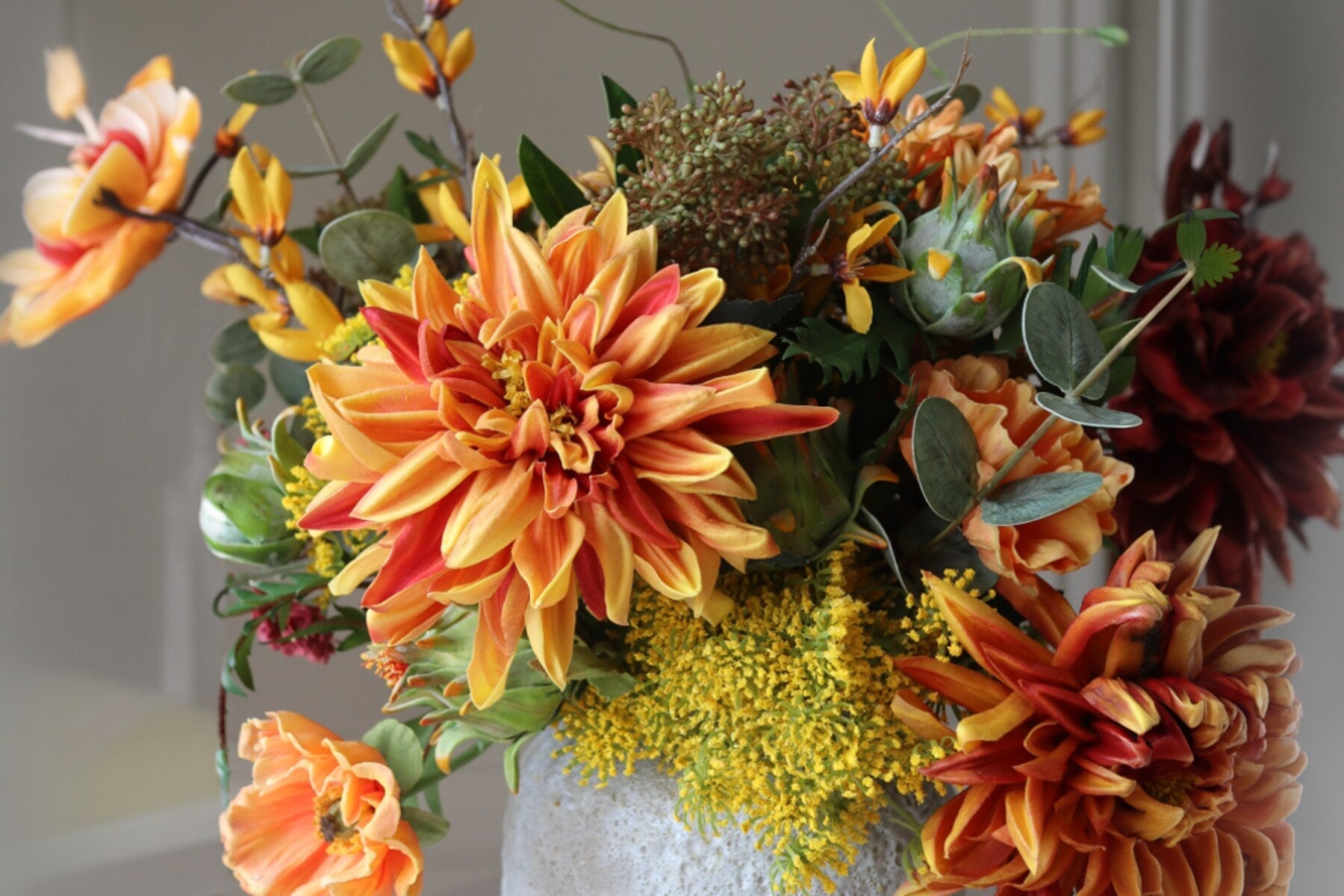
Ten years ago, the answer was "no." Today, the answer is "only if you touch them — and sometimes not even then." Premium artificial flowers like those from Botané use real-touch silicone-coated petals, hand-painted color gradients, and lifelike textured stems. The difference from supermarket artificial flowers of twenty years ago is comparable to the difference between a smartphone and a beeper.
In a blind test we conducted in 2025 with 60 interior designers, only 23% could identify our statement bouquet Heartbeat as an artificial flower within 10 seconds — and most who did admitted they doubted until they touched the stem.
Maintenance: weekly hassle vs. fifteen minutes a month
Fresh flowers in the office practically mean: cleaning up decaying leaves, changing water, cleaning vases, disappointing bouquets that wilt after just 3 days, and an employee or cleaning crew who has to do this regularly. Count on 2 to 4 hours per week of "flower housekeeping" — time that's not on the invoice but is still paid for.
Artificial flowers have one maintenance task: dusting once every 4 to 6 weeks with a soft duster or dry cloth. No water, no waste stream, no mold in the vase, no withered smell. See our detailed maintenance guide for more details.
Impact on employees and visitors
Allergies and pollen
About 1 in 5 Dutch people suffer from some form of hay fever. Fresh flowers in a shared workspace cause discomfort for employees and visitors, especially in spring. Artificial flowers are completely pollen and allergen-free — a significant advantage for offices, waiting rooms, dental practices, and medical practices.
Hygiene in food environments
For restaurants, bistros, and catering companies, HACCP guidelines or their own hygiene protocols often discourage or prohibit fresh flowers near food preparation. Artificial flowers completely circumvent this problem while still providing the ambiance guests expect.
Sustainability: the surprising figures
Here lies the biggest surprise for many buyers. 75% of fresh cut flowers in the Netherlands come from Kenya, Ethiopia, and Ecuador. A typical rose travels 6,500 kilometers by refrigerated air freight, uses an average of 10 liters of water to grow, and is sprayed with pesticides banned in the EU. The CO₂ emissions of one imported rose bouquet are around 32 kilograms — roughly equivalent to driving 200 kilometers.
A premium artificial bouquet has a one-time production footprint of about 8 to 12 kg of CO₂, and lasts 5+ years. Distributed over its lifespan, the annual CO₂ impact is less than 5% of a weekly fresh subscription. At Blooms, we take back old bouquets for repurposing and recycling — so the impact approaches zero. Read more about the hidden CO₂ footprint of cut flowers.
When fresh flowers are still the better choice
To be fair: there are situations where fresh flowers are indeed the right choice. A flower shop itself, a fine dining restaurant where the "fresh" element is part of the experience, a one-time event where scent and transience are part of the concept. In these cases, emotional value outweighs functional value.
However, for most business spaces — offices, hotels, waiting rooms, conference centers, showrooms, retail spaces — the practical advantages of premium artificial flowers significantly outweigh the disadvantages.
Frequently Asked Questions
Do premium artificial flowers fade in sunlight?
Good artificial flowers like the Botané collection are treated with UV stabilizers and remain colorfast for years under normal indoor light. In direct, prolonged sunlight (several hours a day, all year round), slight fading can occur — just like with any textile product.
Can I rent them instead of buying?
Yes, through our business subscription, you can lease a complete setup including periodic changes, maintenance, and seasonal variation.
What happens to old artificial flowers?
Blooms takes back old bouquets for refurbishment and repurposing. Broken parts are separated for material recycling — the circular chain is part of our service.
How many bouquets do I need for my space?
Use our price calculator for an initial estimate, or ask for free advice via the workspace advisor.
Conclusion
For 9 out of 10 business situations, premium artificial flowers offer a better balance between quality, cost, practical convenience, and sustainability than fresh flowers. The savings over 5 years are significant, the aesthetics are indistinguishable, and the impact on employees and the environment is a fraction. Curious which bouquets suit your space? Contact us at hello@blooms.nl or try our workspace advisor.
Read more
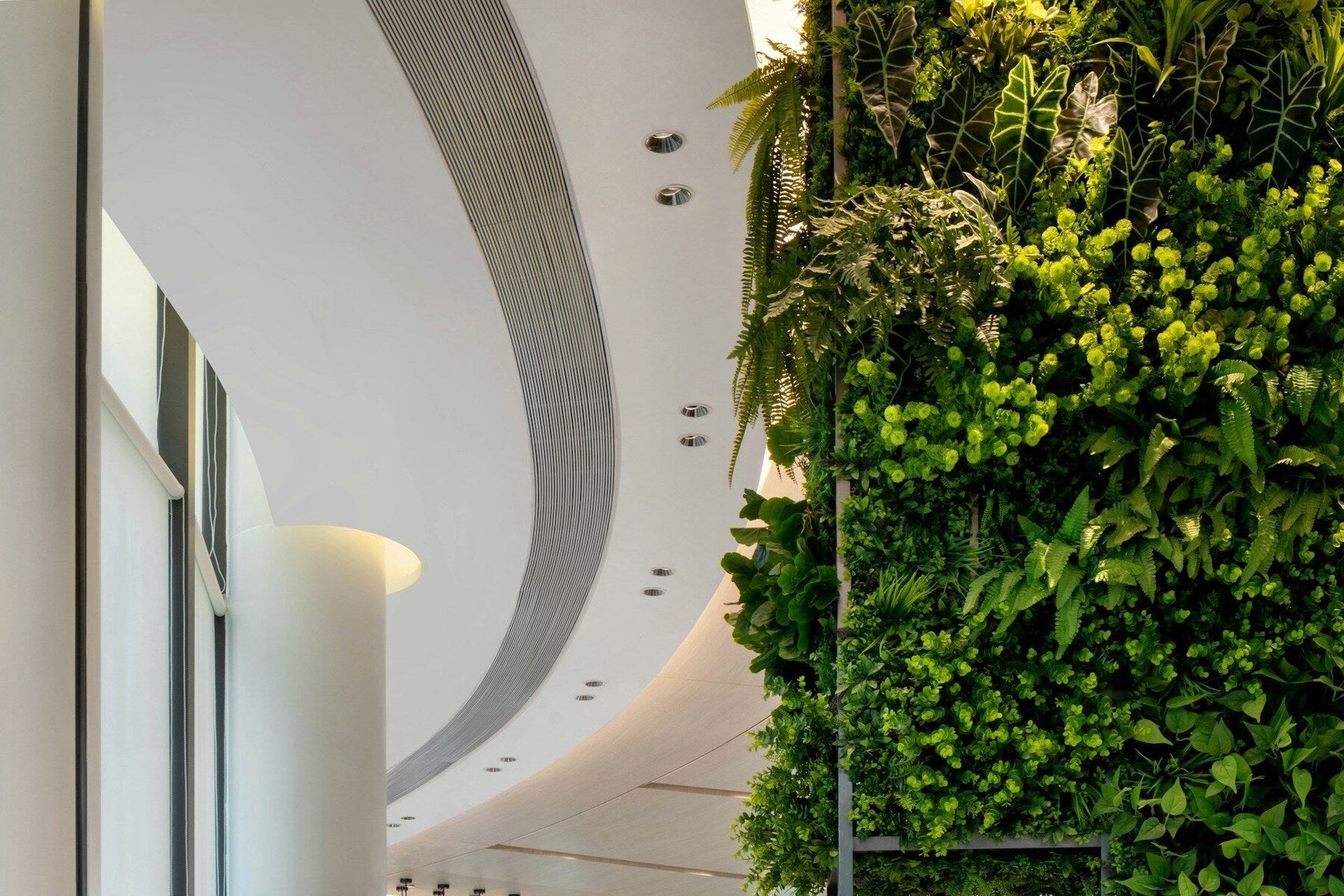
Imports from Kenya, water consumption, pesticides, and weekly packaging streams: why the environmental impact of fresh cut flowers is much greater than you think — and what the alternative offers.
Imports from Kenya, water consumption, pesticides, and weekly packaging streams: why the environmental impact of fresh cut flowers is much greater than you think — and what the alternative offers.