

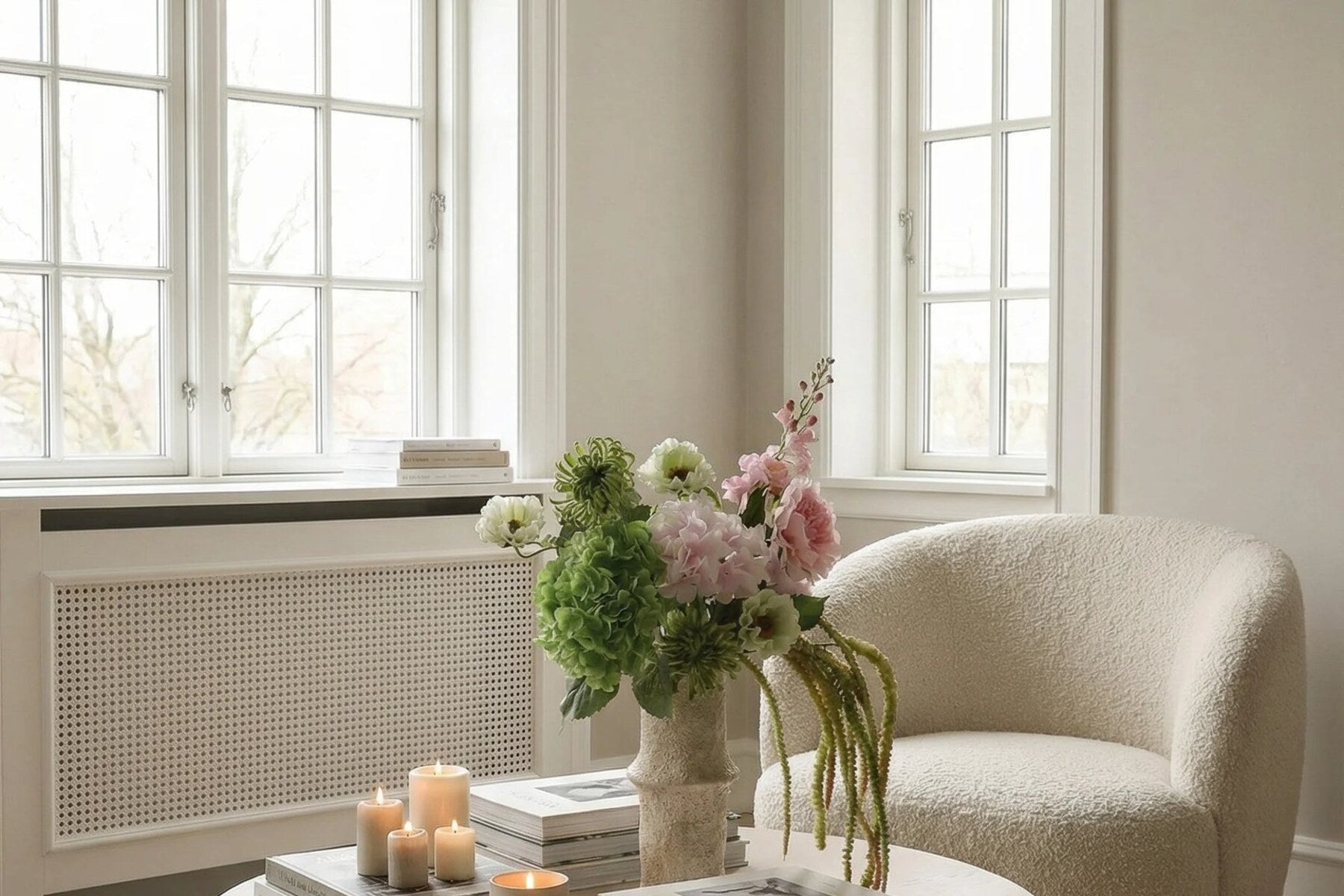
Flowers in the waiting room: hygienic alternative for general practitioners and dentists
Waiting rooms for general practitioners, dentists, physiotherapists, and other healthcare providers face a dilemma with flowers. On one hand, fresh flowers make a clinical space feel more friendly and reduce patient stress. On the other hand, fresh flowers bring pollen, allergens, mold risks, and hygiene problems—precisely what you want to avoid in a healthcare environment. In this guide, we explain why premium artificial flowers have been the standard in modern healthcare waiting rooms for years, and how to create an interior that feels warm without compromising on hygiene.
The Problem with Fresh Flowers in Healthcare Environments
Many healthcare providers would like to have flowers in their waiting rooms but encounter several strict limitations:
- Pollen and allergens: 1 in 5 Dutch people suffer from hay fever symptoms. In a waiting room, they are precisely waiting to see a doctor—additional exposure is undesirable.
- Mold growth in vase water: Stagnant water in vases becomes a breeding ground for bacteria and mold within 2-3 days. In a room with immunocompromised patients, this poses a direct risk.
- Scent: Some flowers (lily, hyacinth) have strong scents that can induce nausea in patients in poor health.
- Maintenance by staff: Who changes the water? In practice, this often falls between the cracks—assistants don't have time for it.
- Inconsistency: One week, fresh, crisp bouquets; the next week, half-wilted stems. Patients subconsciously notice this and associate it with unhygienic care.
The result: many GP practices have no flowers in the waiting room at all, and the space feels clinical and cold. This is a shame, as research shows that plants and flowers in waiting areas reduce patients' measured stress by 12-18%.
Why Premium Artificial Flowers Work in Waiting Rooms
Our Botané collection is specifically suitable for healthcare environments because the bouquets are:
- 100% pollen- and allergen-free—no risk for hay fever sufferers.
- Require no water—no vase water, no mold, no leak risk on laminate.
- Odorless—no overstimulation for patients with migraines or nausea.
- Easy to clean with a microfiber cloth or duster, fitting into a hygiene protocol.
- Always in top condition—no inconsistency between "good and bad weeks."
- Made of materials suitable for disinfectants (within reasonable limits).
Concrete Interior Design Tips per Space
Patient Waiting Area
This is where you make the biggest impact. Choose one full statement bouquet on the assistant's counter and one or two smaller arrangements on tables in the seating area. Use muted colors (soft rose, cream, soft green) that exude calm. Avoid bright colors—these are stimulating rather than calming.
Consultation Room or Treatment Room
One compact arrangement on a cabinet or windowsill. No overwhelming bouquet—the focus should be on the doctor and the conversation. A small, refined composition in neutral tones works perfectly.
Hallway or Passage
A console table halfway with a symmetrical arrangement of two identical bouquets breaks the bare appearance of a long hallway. Ensure the passage remains clear—bouquets should not be an obstacle.
Reception and Check-in
One dominant bouquet that sets the first impression. Patients often pause here (appointment details, payment)—give them something beautiful to look at to make the wait feel shorter.
Hygiene and Cleaning Protocol
In a healthcare environment, every part of the interior must fit into the hygiene protocol. For our Botané bouquets:
- Weekly: lightly dust with a dry microfiber cloth or duster (1 minute per bouquet).
- Monthly: deeper cleaning—soft brush between the petals, then cloth (see our maintenance guide).
- In case of suspected contamination: bouquets can be wiped with a damp cloth and a mild alcohol-based disinfectant. Avoid submersion.
- Semi-annually: complete professional exchange via our business subscription—we collect old bouquets for cleaning and reuse.
Budget for an Average GP Practice
For a practice with a waiting room, two consultation rooms, one treatment room, and a hallway:
- One-time investment (5-7 bouquets + vases): €1,800 to €2,800
- Annual maintenance via subscription: €500 to €800
- Lifespan: 5-8 years with correct placement
- Total cost over 5 years: approximately €4,500 to €7,000
For comparison: a weekly fresh-flower supplier for the same setup costs €80 to €120 per week, or €4,000 to €6,000 per year—so over 5 years, €20,000 to €30,000. The savings with artificial flowers average 80-85%, with better hygiene and consistency.
What about Dental Practices?
For dentists, an additional factor applies: patients are often nervous, and the waiting area is an important moment to reduce that tension. Therefore, we often see slightly fuller arrangements with more color in dental practices than in GP practices—to actively distract attention from what is about to happen. Soft rose and lavender have a calming effect; avoid bright red (association with blood) and acidic yellow (clinical).
Frequently Asked Questions
Are the materials safe for skin contact?
Yes. Our bouquets are made from silicone and high-quality polymers that comply with EU safety standards for indoor applications. No toxic emissions, no skin irritation upon touch.
Do they get hot or catch fire?
No. The materials are flame-retardant and do not emit heat. Safe in any waiting room.
Can children touch them?
Our bouquets are robust and resistant to normal touching. Small children can gently touch them without damage. However, we recommend placing bouquets in children's waiting rooms slightly higher to prevent hiding or pulling.
Can I buy individual arrangements or does it have to be via subscription?
Both are possible. For smaller practices, a one-time purchase works fine. For larger healthcare centers or group practices, a subscription is usually more convenient due to seasonal changes.
Do we get a discount as a healthcare provider?
We offer a special rate for healthcare institutions, schools, and non-profit organizations. Inquire via hello@blooms.nl.
Ready to Make Your Waiting Room Warmer?
A waiting room doesn't have to feel clinical and cold. With the right premium artificial flowers, you can create a warm, calm space without compromising on hygiene or allergy safety. Start with the workspace advisor for customized advice, or contact us via hello@blooms.nl for a no-obligation consultation.
Read more
How do you calculate the actual ROI of switching to premium artificial flowers? Our step-by-step calculator, with a calculation example from a law firm.

How do you make floral design circular? A look at our six-phase chain — from design to take-back, reuse, and material recycling — including CSRD substantiation.