

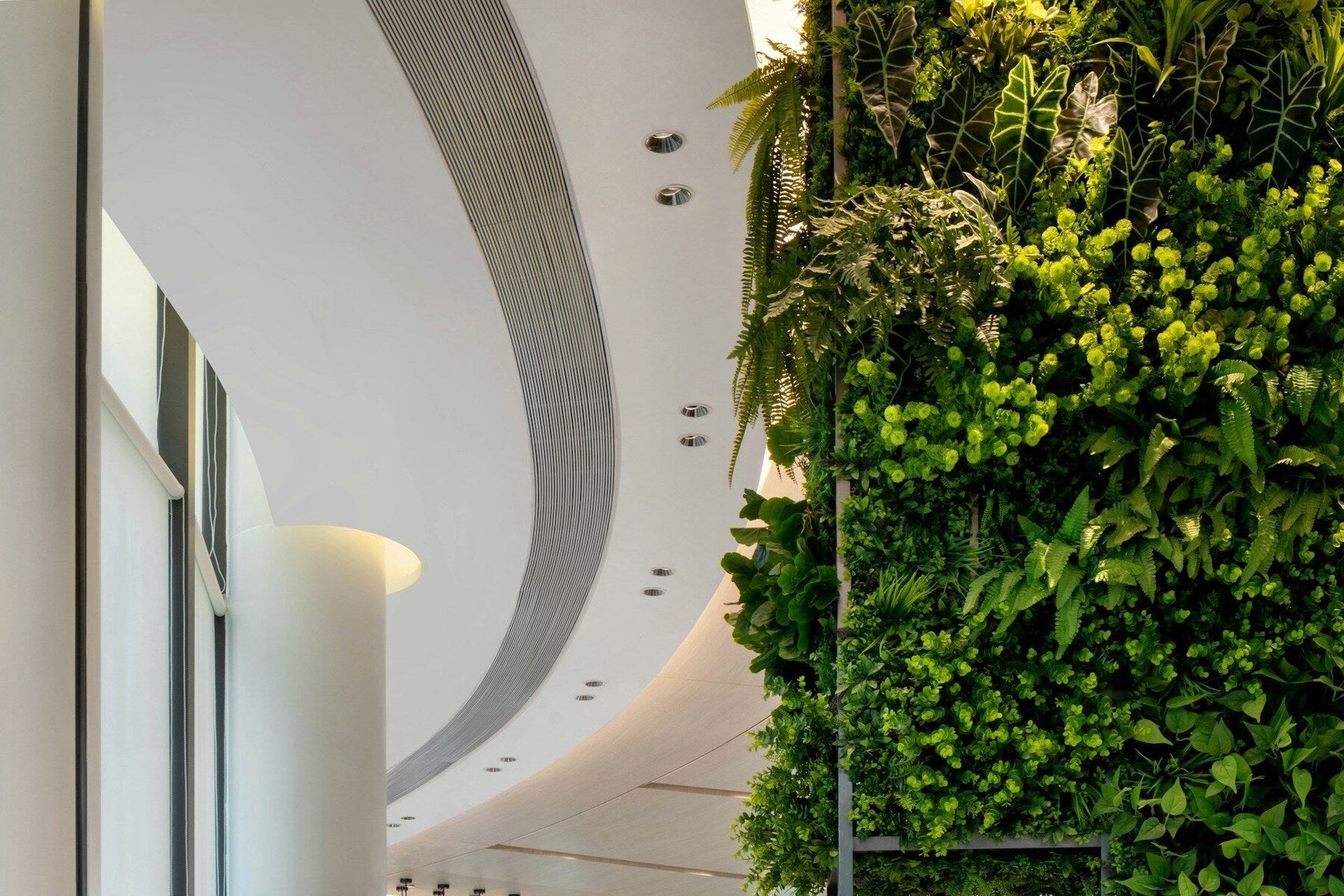
The hidden carbon footprint of fresh cut flowers
When you buy a bunch of roses at the supermarket or have a large bouquet delivered to the office, it seems like an environmentally friendly choice. Flowers, right? Nature. Green. Unfortunately, the numbers tell a very different story. The fresh cut flower industry is one of the most polluting sectors in floriculture, with a CO₂ footprint much higher than most consumers suspect. Time to lay out the facts.
Where do our fresh flowers come from?
The Netherlands is the world's largest exporter of cut flowers, but only a small portion of them actually grow in Dutch greenhouses. Most flowers traded through auctions like FloraHolland come from:
- Kenya (approximately 38% of roses in Europe) — 6,700 km by air freight to the Netherlands
- Ethiopia (growing share, especially roses and carnations) — 5,800 km
- Ecuador and Colombia (especially luxury roses) — 9,500 km
- Dutch greenhouses (tulips, chrysanthemums, gerberas) — heated and lit
So, the idea that you are "buying local" just because you are at a Dutch florist is, in most cases, not true. The flowers in the bucket have, on average, traveled more kilometers than your last holiday flight.
The CO₂ footprint per bouquet
Research by Cranfield University and the University of Lancaster has extensively mapped the CO₂ emissions of cut flowers. The figures are sobering:
- A dozen roses from Kenya: 2.4 kg CO₂ (air transport + cooling)
- A dozen roses from a Dutch greenhouse: 31.4 kg CO₂ (heating + lighting in winter)
- A dozen roses from Ecuador: 3.1 kg CO₂
Surprisingly, a Kenyan rose often has a lower footprint than a Dutch greenhouse rose in winter, because the heating and lighting of Dutch greenhouses (especially using natural gas) are extremely energy-intensive. This reverses in the summer months — but the season when most corporate flowers are ordered is precisely winter.
For an average corporate flower subscription with 8 bouquets per week over an entire year, the total CO₂ footprint amounts to approximately 1,300 kg per year — comparable to a round-trip flight from Amsterdam to Rome for one person.
Water: the invisible impact
A rose uses an average of 10 liters of water during its growth in Kenya or Ethiopia. That seems little until you consider that these flowers grow in regions struggling with severe water scarcity. Around Lake Naivasha in Kenya, water levels have dropped by meters in the last 20 years, partly due to intensive floriculture. This means local communities have less access to drinking water and irrigation for food crops.
A subscription of 8 fresh bouquets per week at the office costs — just for growth water — more than 400,000 liters per year. That's the annual water consumption of a four-person household.
Pesticides and working conditions
Fresh cut flowers are not food, so EU regulations regarding pesticide use are much more lenient than for fruits and vegetables. As a result, roses from Kenya on average contain traces of 4 to 6 different pesticides, including substances banned for food crops in the EU. For workers on flower plantations, this means direct exposure, with documented health risks.
So, flowers that look beautiful are often the product of a chain where working conditions and local water sources are under pressure. For a company with an ESG policy, this is an uncomfortable story.
Packaging and transport
Every flower travels in plastic sleeves, rubber bands, cardboard boxes, and usually on plastic conditioning pallets. For a weekly office subscription, this means about 2 to 3 kg of packaging waste per delivery — or 130 to 160 kg per year per office location. This waste is largely non-recyclable because it is contaminated with plant sap, water, and plastic-cardboard combinations.
How does this compare to premium artificial flowers?
A premium artificial bouquet, such as those from the Botané collection, has a one-time production footprint of approximately 8 to 12 kg CO₂ (materials + production + transport). Spread over a lifespan of 5 to 8 years, this amounts to less than 2 kg CO₂ per year. Compared to the 1,300 kg of a fresh subscription, that's a reduction of more than 99%.
Water: approximately 40 liters once in the production process. Distributed over its lifespan: negligible.
Packaging: one-time upon delivery (cardboard box, reusable). No weekly waste stream.
As Blooms, we also take back old bouquets for refurbishment, reuse, or material recycling — part of our circular design. This further closes the loop and reduces the residual impact to almost zero.
Do artificial flowers count in ESG reporting?
Increasingly, yes. In the CSRD (Corporate Sustainability Reporting Directive), which becomes mandatory for medium-sized Dutch companies from 2025, you must report on Scope 3 emissions — i.e., indirect emissions in your value chain, including purchased goods and services. Fresh flowers fall entirely under this. Replacing them with long-lasting artificial flowers is one of the easiest and most visible sustainability measures a facility manager can take, and it delivers a concrete CO₂ saving that can be included in the sustainability report.
Frequently asked questions
Are Dutch greenhouse flowers not more sustainable than imported flowers?
In the summer often yes, in the winter often no — due to the high energy consumption for heating and lighting. On average over the year, both options come out about even in terms of CO₂.
What about organic cut flowers?
They exist and are a step in the right direction for pesticide use, but they do not solve the transport and water problems. They are also on average 30-50% more expensive than regular cut flowers.
What is the CO₂ impact of Botané bouquets?
A one-time impact of approximately 8-12 kg per bouquet (depending on size), spread over a 5-8 year lifespan. Request a product-specific LCA from us via hello@blooms.nl.
Conclusion
The romantic connection between fresh flowers and "nature" doesn't hold up when you look at the numbers. For business use — where bouquets largely serve an aesthetic and ambiance function — premium artificial flowers are a significantly more sustainable choice. Less CO₂, no water consumption, no pesticides, no weekly packaging waste, and a smaller footprint in your ESG report. Want to know what this means for your organization? Contact us via hello@blooms.nl or try our workspace advisor for a concrete proposal.
Read more
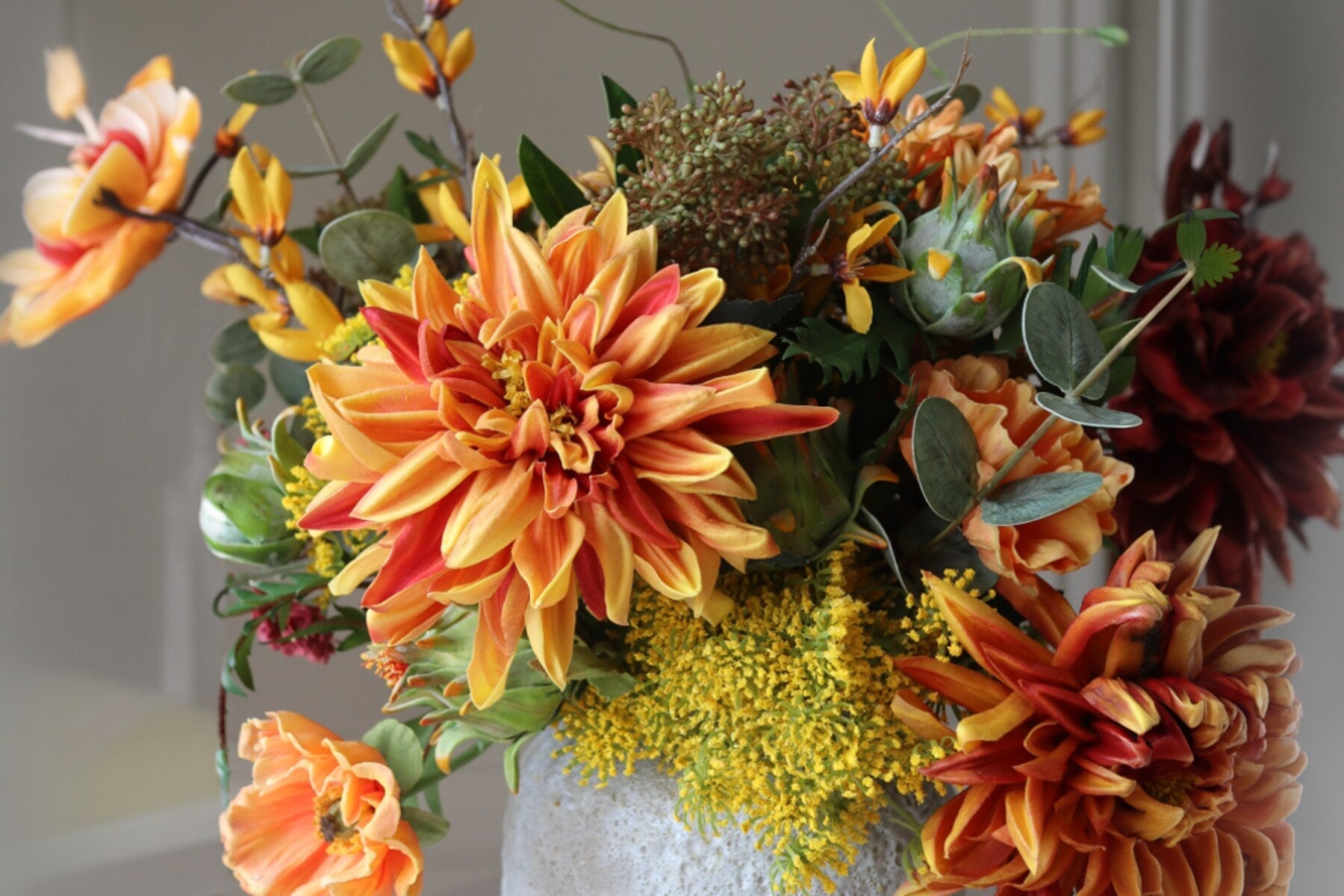
Costs, quality, sustainability, and practicality: the complete business comparison between premium artificial flowers and fresh cut flowers for offices, hotels, and restaurants.
Costs, quality, sustainability, and practicality: the complete business comparison between premium artificial flowers and fresh cut flowers for offices, hotels, and restaurants.