

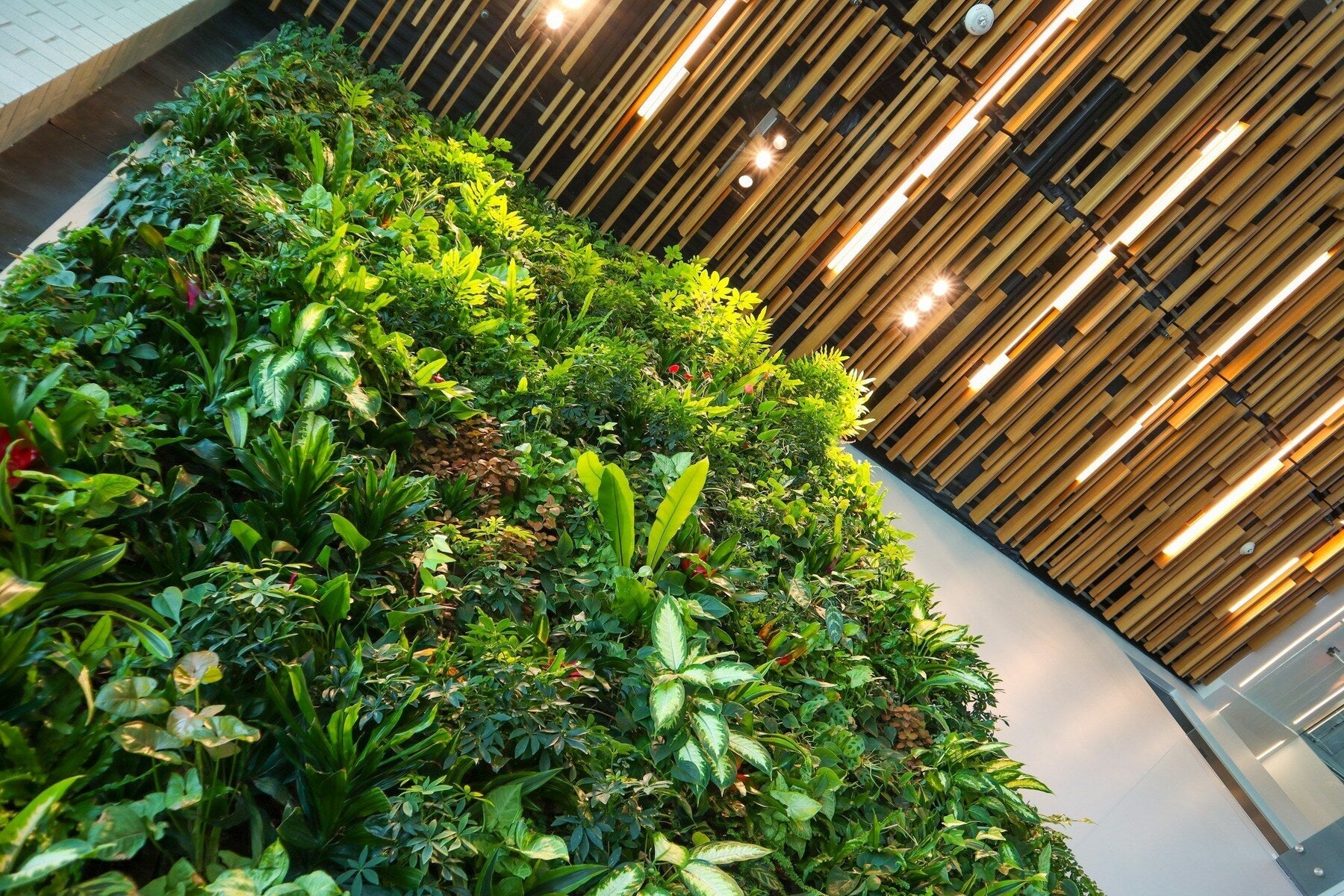
Artificial Flowers vs. Live Plants in the Office
Live plants or premium artificial flowers – which is better for the office? It’s a question many facility managers and interior stylists grapple with. Both have their strengths, and the right answer depends on your space, target audience, and operational context. In this article, we offer an honest comparison, highlighting situations where each option works best – and why the smartest choice is often a combination.
The benefits of live plants
First, let's be honest: live plants have real, measurable benefits that artificial flowers can never match:
- Air quality: some plants (peace lily, monstera, rubber plant) filter VOCs from the air and improve the indoor climate
- Oxygen production: live plants produce oxygen — although the effect in an average office is small
- Biophilic effect: psychological research shows that the presence of living nature in workspaces reduces stress and increases focus
- Moisture regulation: some plants increase humidity in dry offices
- Liveliness: real plants grow, change, and create the feeling that the space is "alive"
The disadvantages of live plants
But live plants also come with problems:
- Maintenance: watering, pruning, fertilizing, repotting — on average 1-2 hours per week for every 20 plants
- Variable appearance: not every plant always thrives. Yellowing, leaf drop, and pests can occur
- Pollen and allergens: some plants can trigger allergic reactions
- Require specific conditions: light, moisture, temperature — not every space is suitable for every plant
- Replacement costs: plants die, especially in offices with dry air or poor light
- Vacations: 2-3 weeks without care is a death sentence for many plants
The advantages of premium artificial flowers
Our Botané collection offers several advantages that live plants cannot match:
- Perfect condition — always: no wilting, no yellowing, no sudden death
- No maintenance: a weekly dusting is sufficient
- No pollen or allergens: suitable for waiting rooms, healthcare facilities, and offices with allergic employees
- Suitable for any space: dark corners, dry offices, spaces without daylight — it doesn't matter
- Flowers instead of greenery: where plants are usually only green, artificial flowers offer color and seasonal variation
- Predictable costs: one-time investment, no weekly deliveries or replacements
The disadvantages of premium artificial flowers
Being honest about the limitations:
- No air purification: artificial flowers do not filter VOCs from the air
- No "life": no growth, no change, no seasonal cycle unless you actively switch them out
- Initial investment: higher than a few plants from the garden center
The comparative cost analysis
For an average office with 50 employees:
| Aspect | Live plants (15 pieces) | Premium Botané (10 bouquets) |
|---|---|---|
| Purchase | €800 - €1,500 | €4,500 - €7,000 |
| Maintenance per year | €1,200 - €2,000 (hours or external service) | €100 (dusting) |
| Replacement per year | €200 - €500 | €0 |
| Lifespan | 2-5 years on average | 5-8 years |
| Total over 5 years | €7,000 - €13,000 | €5,000 - €7,500 |
Based on pure figures, premium artificial flowers already win — and you have no maintenance burden or unexpected casualties.
The best solution: combine both
The smartest approach for most offices is a combination:
Live plants for:
- Bright, spacious lobbies and open zones with daylight
- Statement areas where greenery can add drama (large palms, monsteras)
- Places where air purification has a measurable effect
- Atriums and large green walls
Premium artificial flowers for:
- Receptions (consistent appearance required)
- Meeting rooms (no maintenance during workdays)
- Waiting areas and client meeting rooms
- Dark corners and spaces without daylight
- Canteens and coffee corners (color and vibrancy)
- Spaces with allergic users
Our styling advisors are happy to help with this consideration via the workspace advisor.
What about allergic employees?
An important point: for offices with employees suffering from hay fever or flower allergies, premium artificial flowers are often the only viable option. Live flowering plants bring pollen — artificial flowers do not. If you want to be inclusive of allergic employees, the choice is clear.
Frequently asked questions
Do you also offer live plants?
No, we focus entirely on premium artificial flowers. For live plants, we can refer you to trusted partners if you want a combined setup.
Which plants combine best with artificial flowers?
Large green plants without flowers (monsteras, peace lilies, rubber plants, ficus) combine well. The flowers then come from the Botané collection, the greenery from the live plants.
What about biophilic certification?
For WELL or BREEAM certification, often only live plants count. If you are actively working towards certification, combine a minimum number of live plants with our artificial flowers for areas where maintenance is too complex.
Is the biophilic effect only with live plants?
Research shows that visual representations of nature (photos, artificial flowers, nature motifs) also have a measurable – albeit smaller – biophilic effect. Artificial flowers are therefore not "neutral" but certainly provide psychological value.
Ready to get started with the right mix?
Do you want a combined approach for your space? Our styling advisors can help with the right distribution. Start with the workspace advisor or contact us via hello@blooms.nl.
Read more
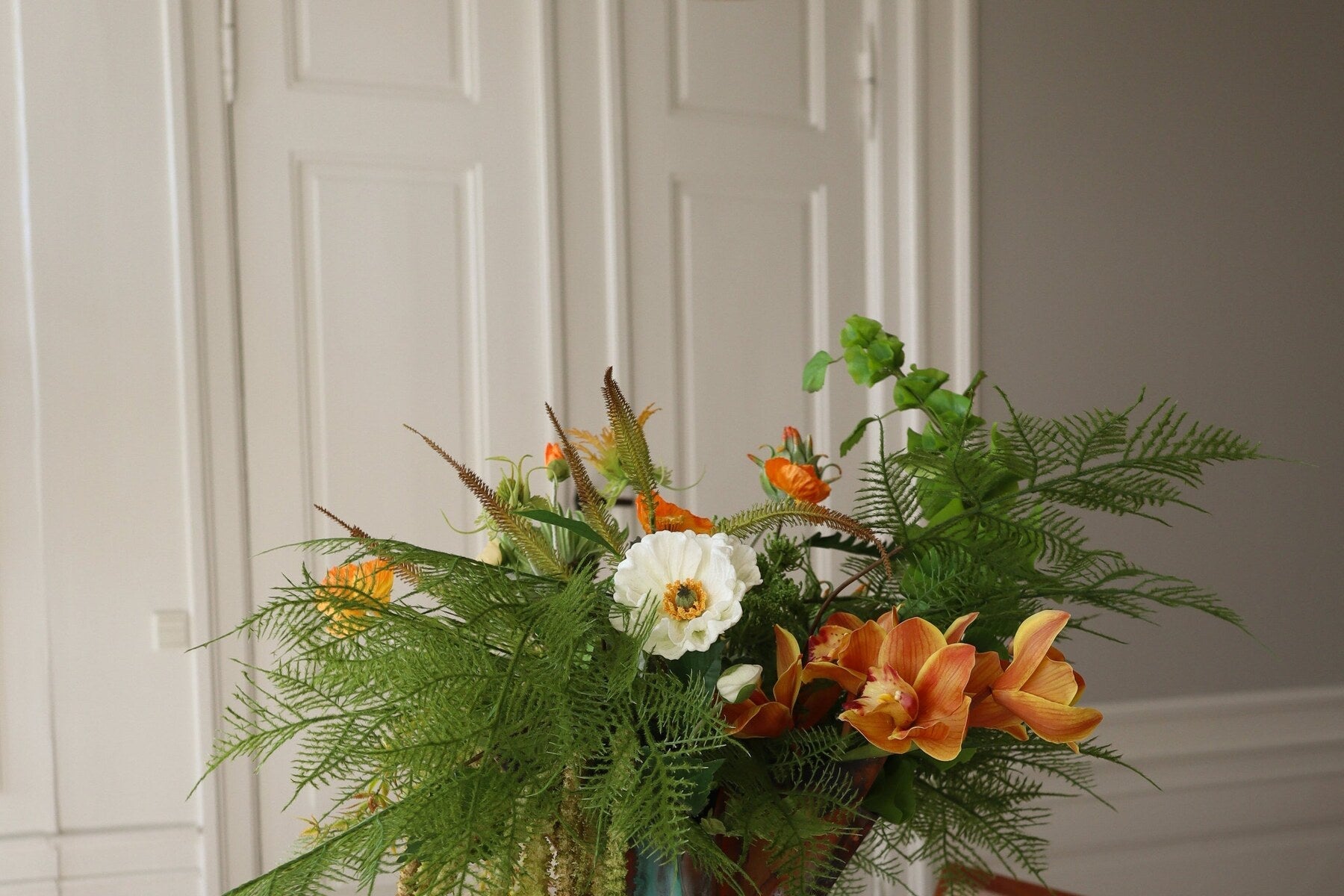
One-off purchase or business subscription? A fair cost comparison and when each model is suitable.
One-off purchase or business subscription? A fair cost comparison and when each model is suitable.