

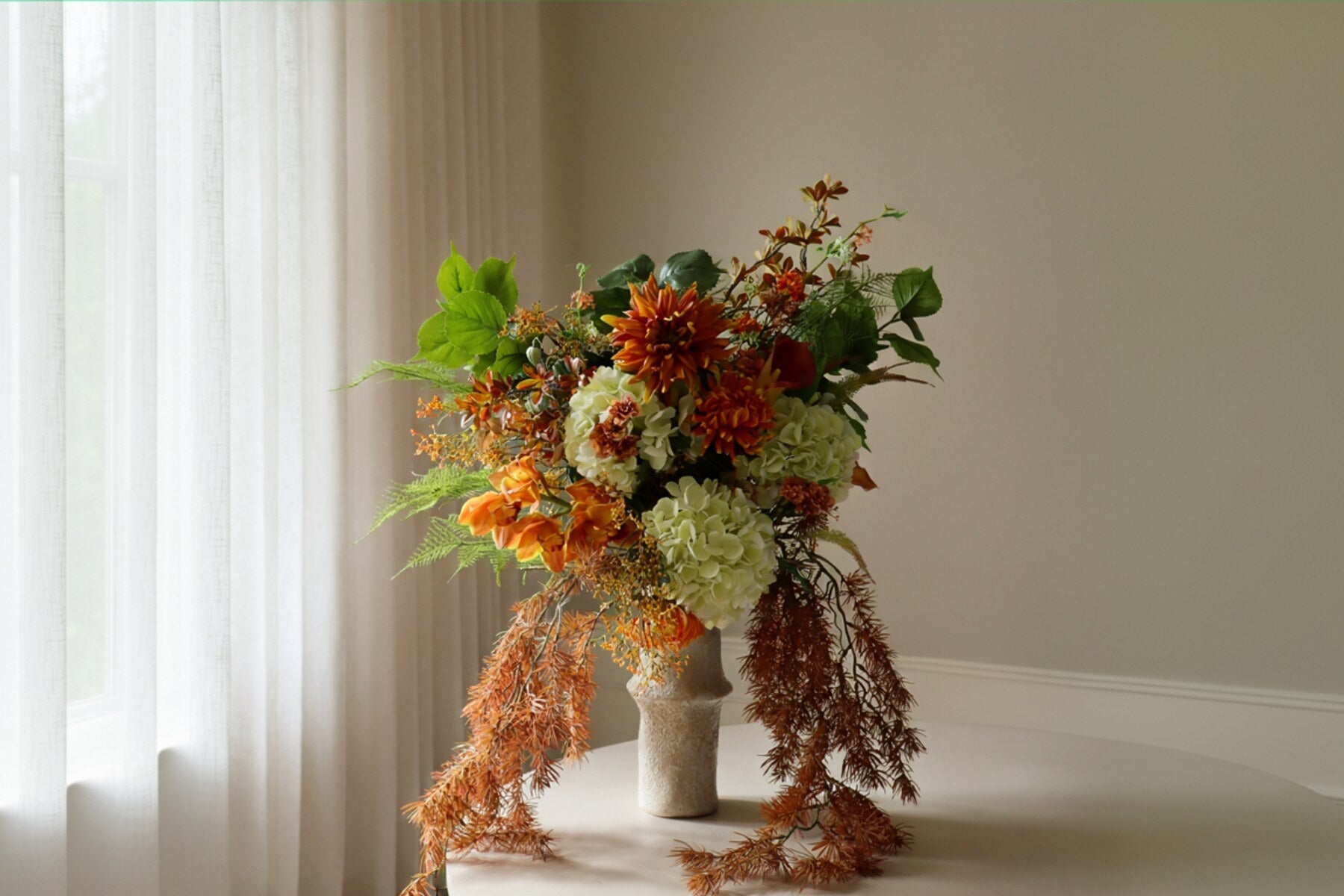
Flowers for notary offices: timeless interior design with class
A notary's office holds a unique position: clients visit for the most significant moments in their lives — buying a house, establishing a company, executing a will, settling an estate. Often with emotion, sometimes with tension. The office's interior must exude calm and meticulousness, and flowers play an underestimated yet crucial role in achieving this. In this article: how premium artificial flowers make a notary's office warmer, more professional, and more consistent.
Why flowers are extra important in a notary's office
Many clients of a notary have mixed feelings. Buying a house is a joyful step, but also nerve-wracking. Executing a will involves contemplating mortality. Arranging a divorce is sad. Starting a business is exciting but uncertain.
In all these moments, the physical space — more than many people realize — determines how the client experiences the event. A bare, clinical space heightens tension. A warm, well-maintained space reduces it. Flowers are one of the most powerful tools to create that warmth — and they don't have to be fresh to have that effect.
The four hotspots of a notary's office
The reception
Clients often arrive earlier than their appointment and wait in the reception area. A well-maintained statement bouquet on the counter or a tall console table lowers the threshold for entering. Choose warm, muted tones — not too exuberant, not too clinical.
The signing room
The room where deeds are signed. Clients often sit at a table here for an hour or more, sometimes with multiple parties (seller, buyer, real estate agent). A compact, understated arrangement on the table or a side table provides a focal point without disrupting discussions.
The waiting room
For larger notary offices with a separate waiting area: a mid-size arrangement on the coffee table and possibly a smaller bouquet by the window. Clients waiting for their appointment have time to look — give them something beautiful to look at.
The hallway to the signing room
Often an overlooked space, but important: this is the "walk" between the waiting area and the important moment. One or two accents on console tables along the hallway make the transition less clinical.
Style choices for different notary office types
Classic notary office in a canal house
Suits: classic bouquets of peonies, roses, and hydrangeas. Muted tones (old rose, cream, muted green), ceramic or porcelain vases. Not too modern — aligns with the historic building.
Modern notary office in a new construction location
Suits: Japandi style, asymmetrical arrangements, muted green and white, sleek glass or metal vases. Subtle modernity without becoming clinical.
Family business in a village or small town
Suits: warm arrangements with natural tones and texture. Slightly less formal, more approachable — in keeping with the human scale of a village office.
Specific considerations for notary offices
- Allergies: nobody wants to sneeze during an important deed signing. Pollen-free is a real advantage here.
- Scent: strongly scented flowers (lily, hyacinth) can be overwhelming in a small room with multiple people. Our bouquets are scent-free.
- Dust-free: deeds and official documents must be protected from dust. Our bouquets do not shed pollen or plant debris.
- Consistency: a deed signing on Friday deserves the same styling quality as one on Monday.
Budget for an average notary's office
For a notary's office with 8-15 employees, one location, 4 main rooms:
- One-time investment: €2,800 to €4,500
- Annual maintenance: €1,200 to €1,800
- Comparison with fresh flowers: typically €7,000 to €13,000 per year
- Savings over 5 years: €30,000 to €55,000
Frequently asked questions
Does this also suit our monumental building?
Certainly. Our classic bouquet styles perfectly complement historic buildings — they enhance their dignified character without appearing anachronistic.
Can we start with just the reception and signing room?
Yes. Many notary offices begin with these two key locations and later expand to the waiting room and hallway.
Do you work under NDA?
Naturally. Our consultants are accustomed to working in environments with confidential documents and client information.
How often do seasonal changes occur?
Standardly every quarter, scheduled at a quiet time of the week so as not to disrupt office operations.
A no-obligation consultation?
Would you like to explore what premium artificial flowers can do for your notary's office? Start with the workspace advisor or contact us via hello@blooms.nl for a confidential introductory meeting.
Read more
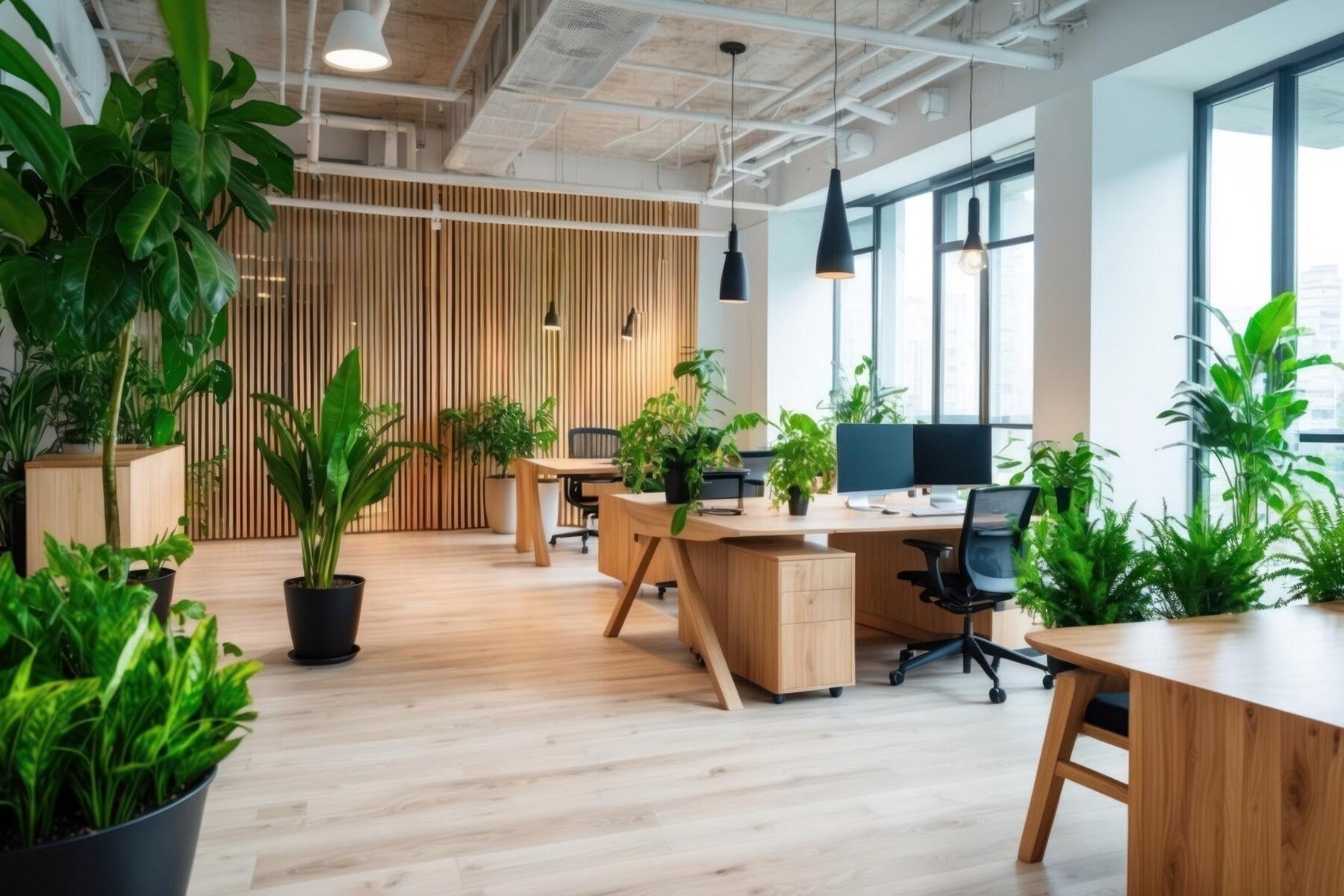
Why accounting firms are increasingly switching to premium artificial flowers — no maintenance, allergy-free, and suitable for a professional image.
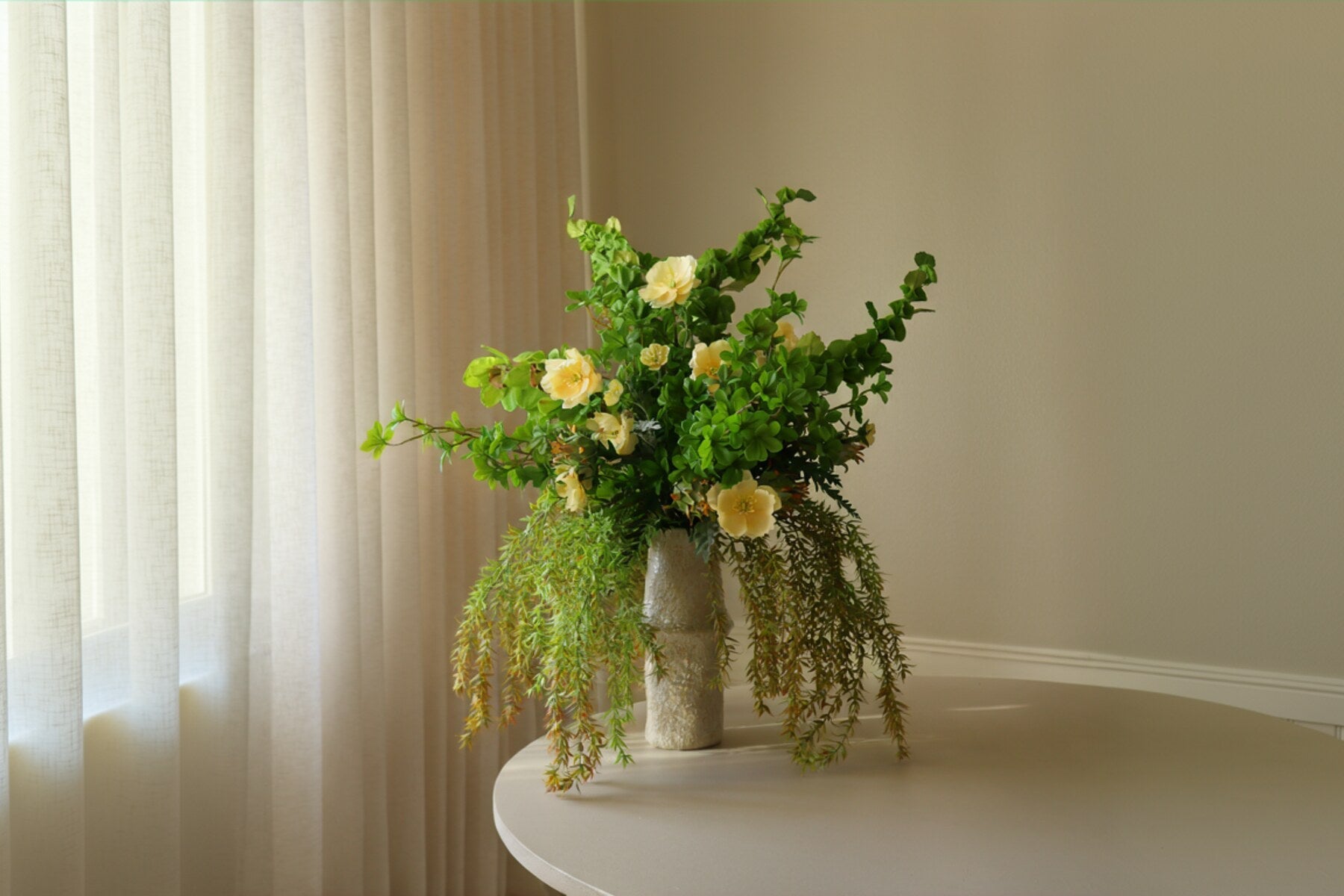
How private banking locations create a premium look with floral arrangements suitable for high-net-worth clients.