

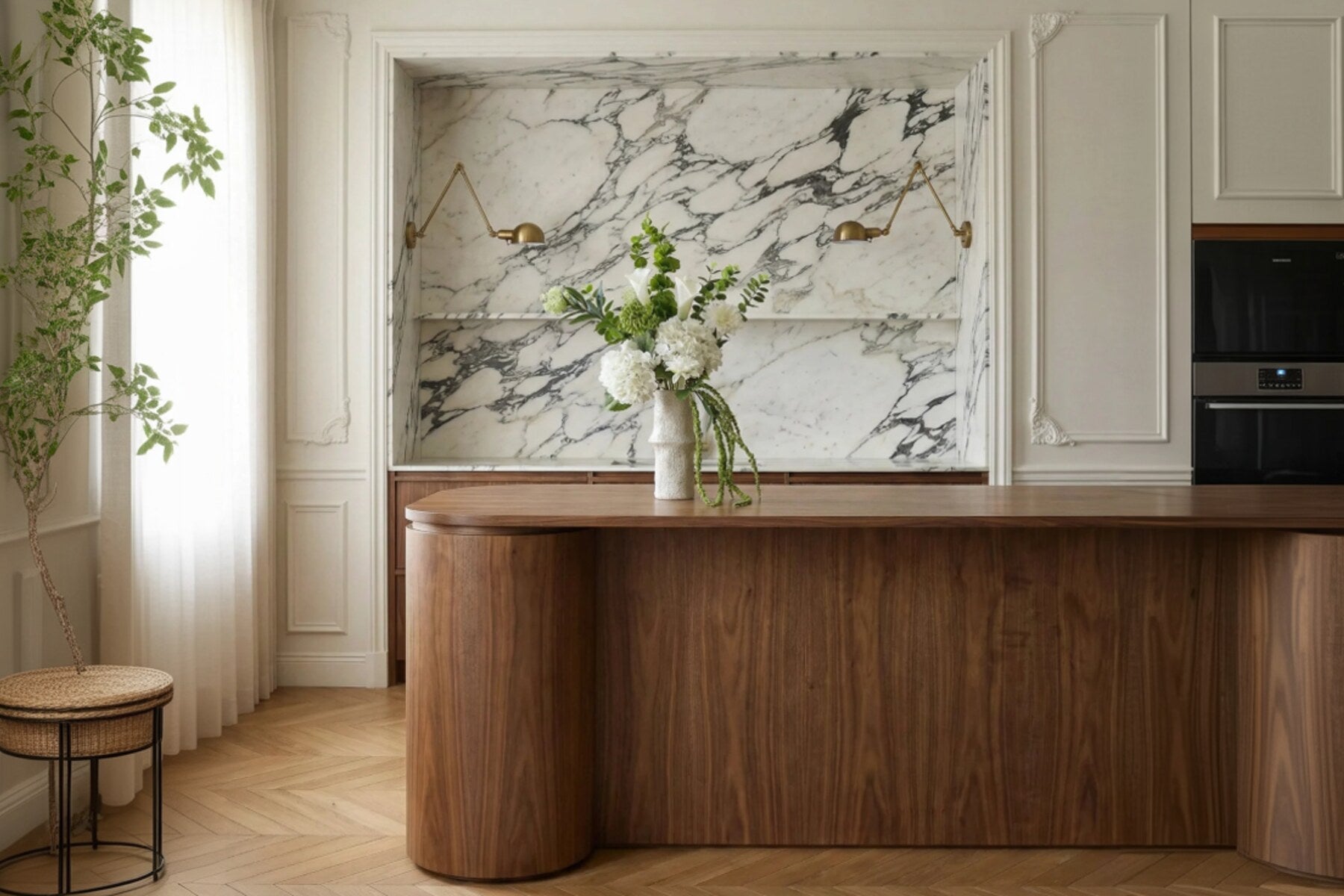
Which flowers suit which office style?
A beautiful bouquet choice starts with the question: does this suit my space? Not every bouquet style works in every office environment. A dramatic classic arrangement will look out of place in a minimalist tech office, and an asymmetrical Japandi piece will feel lost in a traditional notary's office. In this article: a practical guide to choosing the right floral style for different office interiors, focusing on six common styles.
Why the style needs to match
Flowers and interior design work together. When they complement each other, the space feels coherent and intentionally styled. When they clash, it feels messy and unintentional — even if both elements are beautiful on their own. Three principles:
- Style family: classic with classic, modern with modern. Mixing is possible, but requires expertise.
- Color palette: flowers should harmonize with the main colors of the interior, not contrast with them.
- Scale: large spaces require large arrangements, small spaces require more compact ones.
Style 1: Classic-Traditional
How to recognize it: dark wood, leather chairs, bookshelves, oriental rugs, subdued lighting. Often found in law firms, notary offices, old family businesses, and boardrooms.
Which flowers fit:
- Classic flowers: peonies, roses, hydrangeas
- Subdued tones: burgundy, old rose, cream, muted green
- Symmetrical arrangements on console tables
- Full, round bouquets instead of asymmetrical compositions
Vases: ceramic, porcelain, molded glass. No metal or modern materials.
Examples from our collection: Old Rose, Velvet Rouge, Heartbeat, Celestial Bloom.
Style 2: Modern-Minimalist
How to recognize it: white, glass, clean lines, minimal furniture, lots of natural light, few accessories. Often found in international law firms, consulting firms, premium tech companies.
Which flowers fit:
- Simple, sculptural flowers — not too busy
- White, muted green, soft beige
- Asymmetrical arrangements with "empty space"
- Single-stem or duo-arrangements often work better than full bouquets
Vases: tall, slender, glass or metal. Simple shapes.
Examples from our collection: Blossom Veil, Ivory Cascade, Milkshake.
Style 3: Japandi (Japanese-Scandinavian)
How to recognize it: light wood, neutral tones, natural materials, asymmetry, "wabi-sabi" elements, lots of calm. Popular with wellness brands, design agencies, premium boutiques, and modern hotels.
Which flowers fit:
- Asymmetrical, "natural" compositions
- Earthy tones: olive green, warm cream, terracotta, muted blue
- A few stems that fall "out of line" — conscious imperfection
- Mix of flowers and green branches
Vases: earthenware, rough ceramics, natural stone. Imperfect forms are beautiful.
Examples from our collection: Celestial Bloom, Old Rose, natural green arrangements.
Style 4: Industrial-Warm
How to recognize it: concrete, metal, dark wood, exposed brick, high ceilings, vintage elements. Often found in creative agencies, media companies, lofts, and converted warehouses.
Which flowers fit:
- Natural, organic arrangements that contrast with the hard materials
- Earthy tones and texture instead of brighter colors
- Vertical arrangements suit the high spaces
- Mix of flowers and greenery for vibrancy
Vases: metal, rough earthenware, recycled glass. Shapes with character.
Examples from our collection: Heartbeat, Velvet Rouge, branch arrangements.
Style 5: Boho-Contemporary
How to recognize it: warm tones, texture, woven materials, plants, mix of styles, "lived-in" feel. Popular with lifestyle brands, hospitality, wellness practices.
Which flowers fit:
- Full, vibrant arrangements
- Warm tones: terracotta, mustard, old rose, deep red
- Mix of flowers, greenery, and branches
- Not too perfect — loose, natural compositions
Vases: woven baskets, rough ceramics, terracotta. Variety is welcome.
Style 6: Corporate Modern
How to recognize it: glass, marble, metal, dark wood, designer chairs, international allure. Often found in banks, international consulting firms, headquarters of multinationals.
Which flowers fit:
- Refined, high-quality arrangements
- Subdued tones with a few high-quality accents
- Symmetrical or subtly asymmetrical compositions
- Statement pieces at the entrance, more restrained elsewhere
Vases: high-quality glass, ceramic, metal. Timeless shapes.
General principles — regardless of style
Three principles that always apply:
- Keep the color palette limited: 2-3 main colors throughout the office create visual calm.
- Scale to space: large spaces require larger arrangements — otherwise, they disappear.
- One "wow" spot per room: not every location needs to scream for attention. One dominant arrangement per room works better than four mediocre ones.
Help with the choice
Does it seem overwhelming? Our styling advisors provide personalized advice via the workspace advisor based on photos or an on-site visit. Not a sales pitch — but concrete advice.
Frequently asked questions
Can I mix styles?
Carefully. Mixing can work well (e.g., a classic arrangement in a modern space as a deliberate contrast), but it requires a conscious choice. When in doubt: stick to one style.
What if my office has different styles per floor?
It's sensible to vary the flowers per floor, with a common thread (color palette, vase choice) connecting the floors.
How do I know what style my office has?
Send us a few photos, and we'll tell you. Often, the style is a mix — we can help with that.
Do you follow trends?
We follow trends but choose timeless main choices. Also, read our 2026 trends guide.
Ready to choose the right style?
Browse the Botané collection, use the workspace advisor for advice, or contact us at hello@blooms.nl.
Read more
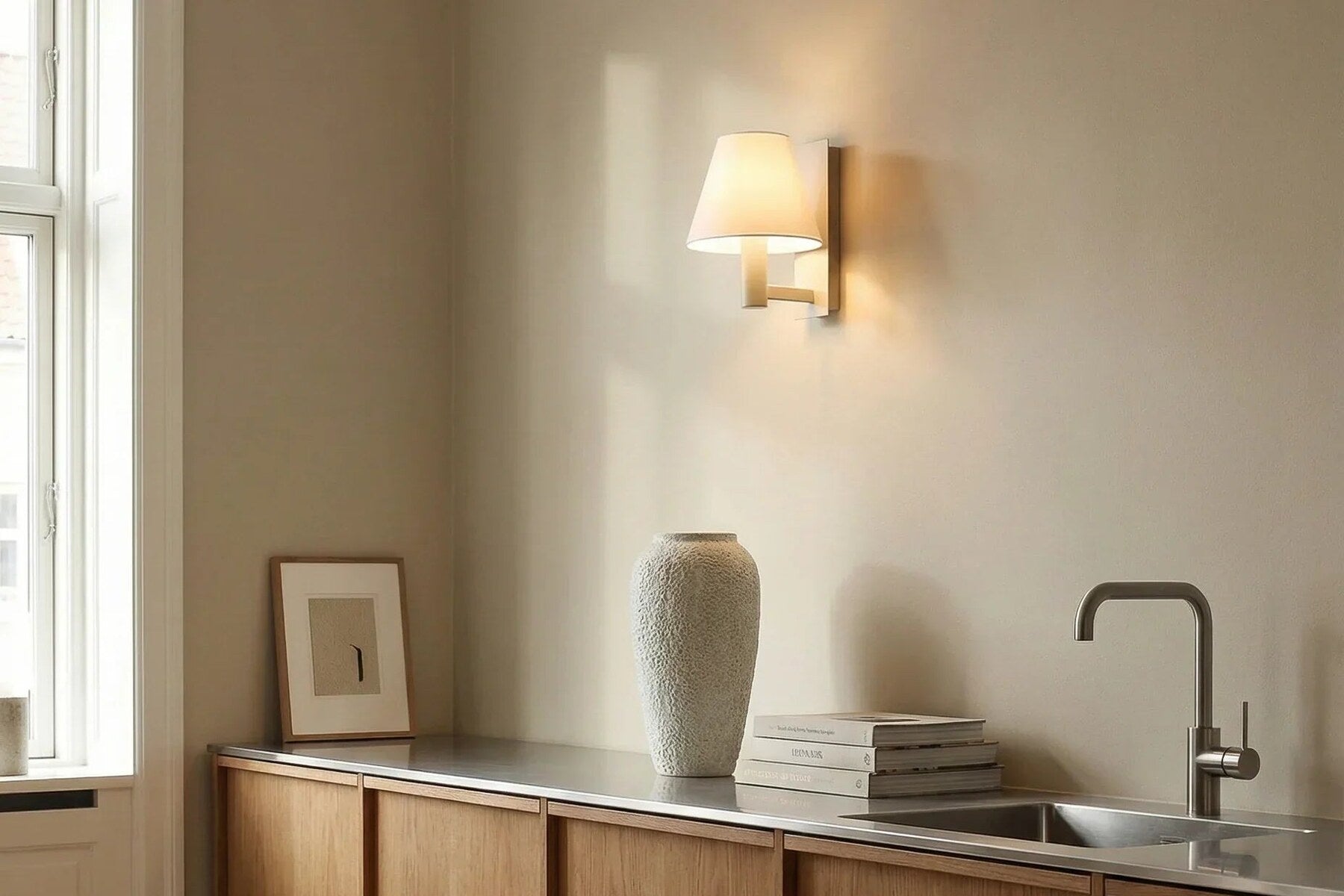
The right vase determines 30% of the look. A practical guide on height, width, shape, material, and color-matching.
The right vase determines 30% of the look. A practical guide on height, width, shape, material, and color-matching.